Site intelligence · Reviewed July 2026

Drainage & Expansive Soils in Colorado Outdoor Construction

Why water movement, soil behavior, roof runoff, walls, pools, terraces, and landscape systems must be coordinated before finishes.

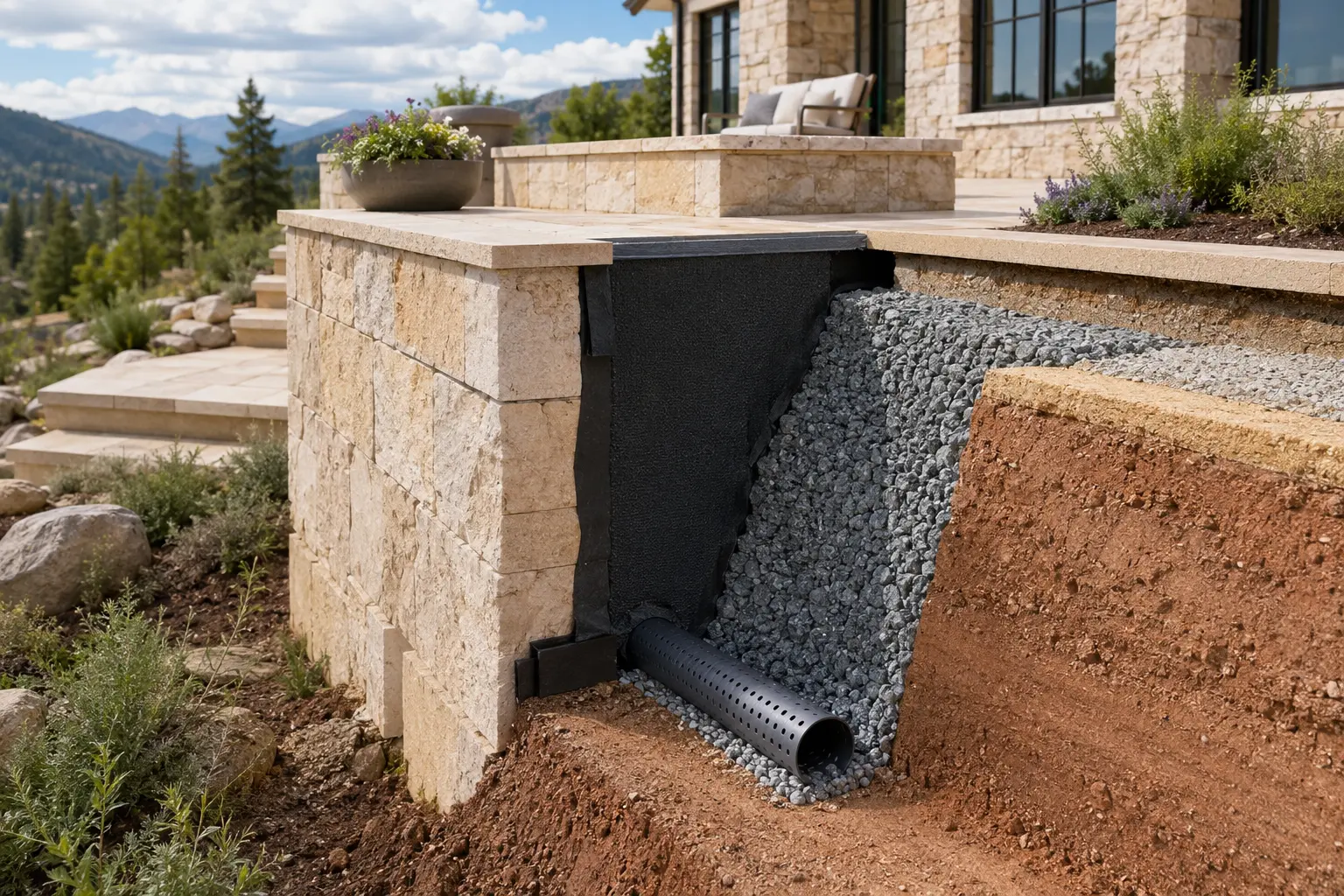
Exposed engineered drainage assembly behind a limestone Colorado estate terraceIllustrative registry study
Direct answer

Drainage and soil behavior should be treated as whole-property systems. Roofs, terraces, pools, walls, lawns, drives, neighboring runoff, irrigation, snowmelt, and subsurface conditions interact; solving each feature independently can simply move water and risk somewhere else.

Owner briefing

Three points to carry forward.

01

Build the water map

Document high and low points, roof discharge, swales, inlets, walls, drives, neighboring flows, irrigation, snow storage, pool overflow, and known wet areas. A drainage concept must explain where water begins, how it travels, and where it safely ends.

02

Understand soil sensitivity

Expansive or compressible soils, undocumented fill, collapsible material, frost, and moisture variation can affect slabs, walls, foundations, decks, utilities, and landscape. Site-specific professional advice may be appropriate where consequences are material.

03

Coordinate hardscape and structure

Surface slope, joints, waterproofing, drains, wall backdrainage, footing drains, subbase, sleeves, penetrations, thresholds, and adjacent foundations should be detailed as interfaces rather than delegated to separate trades.

04

Integrate landscape water

Soil preparation, planting zones, irrigation, mulch, native areas, turf, tree establishment, and drainage structures should operate together. Overwatering near foundations or walls can undermine otherwise careful structural work.

05

Plan for observation and maintenance

Provide accessible cleanouts, serviceable drains, visible overflow paths, erosion monitoring, seasonal startup and shutdown, and documentation for the owner. Water systems that cannot be inspected are difficult to manage.

Primary references

Official sources used for this briefing.

Requirements change. Open the current source and verify the parcel, scope, and authority having jurisdiction before relying on any planning assumption.

  1. Colorado Geological SurveyExpansive Soil and Rock
  2. City of Castle PinesStormwater Management and GESC Resources
  3. City of Cherry Hills VillageResidential Fence and Wall Requirements

Private assessment

Ready to define the builder your property requires?

Begin registry review