Feature intelligence · Reviewed July 2026

Which Architectural Water Features Work for Colorado Estates?

How reflecting basins, rills, jets, spillways, raised spas, and infinity edges differ in experience, infrastructure, water use, and winter operation.

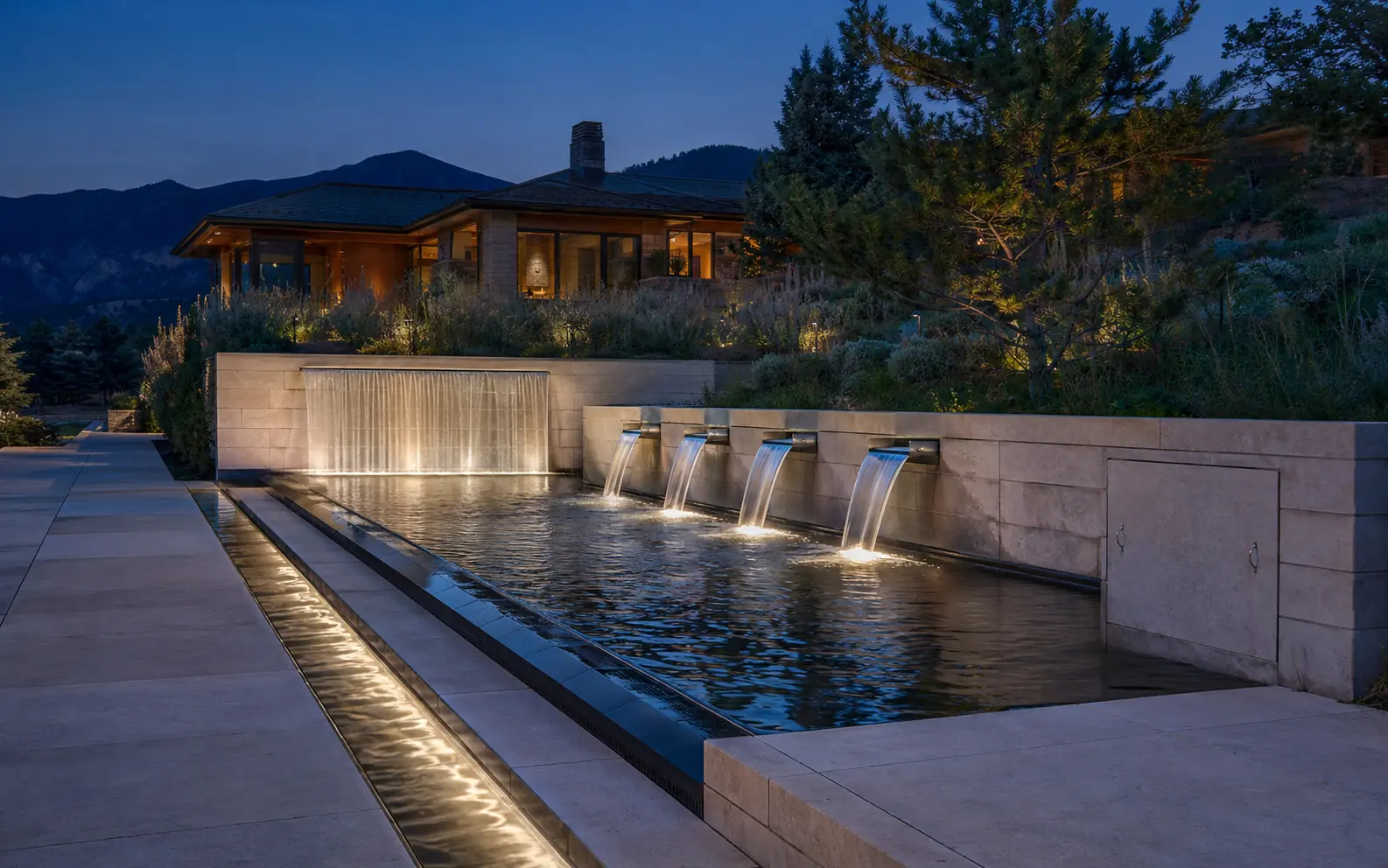
Illustrative Colorado estate with a reflecting basin, rill, infinity pool, raised spa, and laminar water jetsIllustrative registry study
Direct answer

The best water feature is the one whose sound, movement, reflection, hydraulics, maintenance, and winter state support the estate’s architecture. In Colorado, every concept should be evaluated both full and operating—and drained, covered, dormant, or frozen—before it is selected.

Owner briefing

Three points to carry forward.

01

Reflecting basins and rills

Still basins create reflection and quiet spatial separation; rills create direction and subtle movement. Both demand exact level control, edge detailing, waterproofing, filtration, debris strategy, drainage, and a credible appearance when shut down.

02

Laminar jets and controlled arcs

Well-designed laminar streams can frame movement without broad splash, but wind, alignment, lighting, nozzle service, landing geometry, water quality, and winter shutdown must be addressed. They are precision systems, not simple fountain heads.

03

Spillways, scuppers, and waterfalls

Falling water changes sound, aeration, splash, evaporation, mineral deposits, nearby material exposure, and pump requirements. The desired acoustic effect should be tested at conversation distance and under variable flow.

04

Raised spas and infinity edges

Level changes can make water architecture dramatic, but they add structural, hydraulic, surge, waterproofing, safety, cover, and service considerations. The edge should reinforce the view and composition rather than exist only as a premium upgrade.

05

Water and energy stewardship

Covers, wind protection, temperature, filtration, leak detection, efficient pumps, make-up water, overflow, backwash, irrigation relationships, and drought-stage operations affect long-term responsibility and cost. Local utility rules and owner expectations should be checked early.

06

Plan the dormant season

Define which systems operate year-round, which are drained or winterized, how empty vessels appear, where snow and ice collect, how equipment is protected, and what the spring commissioning process requires. The estate should remain composed in January.

Primary references

Official sources used for this briefing.

Requirements change. Open the current source and verify the parcel, scope, and authority having jurisdiction before relying on any planning assumption.

  1. Denver WaterTips to Save Water with Swimming Pools and Spas
  2. Denver WaterXeriscape Plans and Principles
  3. Colorado Geological SurveyExpansive Soil and Rock

Private assessment

Ready to define the builder your property requires?

Begin registry review